"I just noticed an orange, yellowish haze." That's how one Granger resident described the dust cloud drifting off Cleveland Road this June, as grading crews worked the old St. Joe Farms property where Microsoft is building a data center campus. The dust made the news. The paperwork that actually governs how most well-and-septic homes change hands in Granger did not, because it changed months earlier, inside a health department office, with no cameras present.
If you're planning to sell a home on private well and septic in Granger this fall, or you're looking at one as a buyer, the rule you've probably heard about, the septic inspection, is not the one likely to slow down your closing. The one that will is the water test. And the reason both of those things are true at once is worth understanding before you list.
Two Rules, and Only One Still Bites
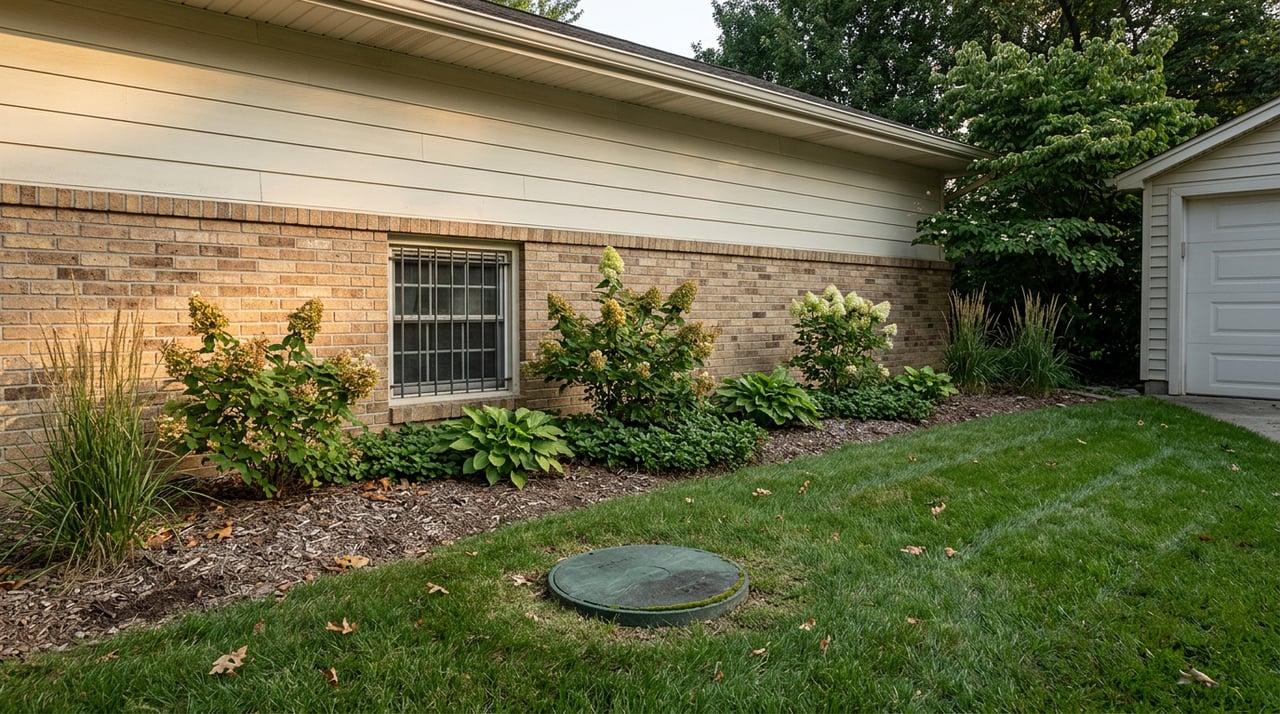
Granger sits mostly outside Mishawaka's city limits, which means the default utility setup here is what it's always been: a private well for water, a septic system for waste. St. Joseph County's Health Department regulates both, and for years the assumption among sellers was that a septic inspection came with the territory anytime a well-and-septic home changed hands.
That assumption is now only partly true. A change to state code has narrowed when a septic inspection is required at property transfer. Meanwhile, the water test that most sellers barely think about remains mandatory on every single transfer, no exceptions for age of system or location within the county.
Here's the split, as it actually stands.
| Requirement | What Most Sellers Assume | What St. Joseph County Actually Requires |
|---|---|---|
| Water test | Optional, or only if the buyer asks | Mandatory on every transfer with an on-site well: coliform bacteria, E. coli, nitrates, and arsenic, completed before closing |
| Septic inspection | Mandatory on every well-and-septic sale | Required only if the property sits within the St. Joseph Aquifer System and the septic system has not been replaced or the property has not transferred in the past 15 years |
The practical effect is that a lot of sellers walk into a listing appointment braced for a septic inspection that county code may not actually require, while treating the water test, the one rule with zero exceptions, as an afterthought.
Why the Septic Rule Got Easier
The narrower septic rule traces back to concern over the St. Joseph Aquifer System, Indiana's only sole-source aquifer, where the county has spent years monitoring whether concentrated well-and-septic development is affecting groundwater. Health officials have documented elevated nitrate levels in parts of Granger for more than a decade, and that history is part of why septic condition used to get scrutinized at every sale regardless of system age.
The current rule keeps that scrutiny focused where it matters most: properties inside the aquifer boundary with septic systems old enough that nobody has looked at them in fifteen years. If your system was installed or last inspected more recently than that, or your parcel falls outside the mapped aquifer boundary, the transfer inspection requirement doesn't apply. That's a meaningful change for a seller budgeting time and money ahead of a listing, but it only helps if you actually know which category your property falls into before your buyer's inspection period starts, not after.
The Timeline That Catches People Off Guard
The water test isn't optional, and the schedule around it is tighter than most people expect. In practice, a well-and-septic sale in St. Joseph County runs through this sequence:
- The seller (or their agent, on the seller's behalf) arranges water testing for coliform bacteria, E. coli, nitrates, and arsenic before closing.
- If a septic inspection applies under the aquifer and 15-year conditions, it happens on the same timeline.
- Results, water test and septic inspection alike, must be provided to the buyer at least three days before closing.
- Within five days after closing, the seller submits the test results (or proof of municipal utilities, if applicable), a Property Transfer Application, and a $75 fee to the county health department.
- Violations carry penalties of up to $1,500 per day, and the health department holds the seller, the seller's agent, and the title company all responsible for compliance, not just the seller alone.
That last point is the one worth sitting with. This isn't a box a seller can quietly skip and hope nobody notices. The county has built in shared accountability across everyone at the closing table.
None of this replaces Indiana's separate disclosure requirement. Sellers still have to report any known septic or well problems on the state Residential Real Estate Sales Disclosure form, and selling a home "as-is" does not remove that obligation. A water test that comes back clean doesn't erase a history of backups or a well that runs low every August. Both belong on the form if you know about them.
What's Happening at the End of Cleveland Road
The Microsoft data center taking shape on the former St. Joe Farms property, roughly 900 acres east of Capital Avenue and Cleveland Road, is the first project in recent memory to bring municipal water and sewer into this stretch of Granger. The St. Joseph County property transfer rules that govern every other well-and-septic sale in the area don't touch this site, because Mishawaka is extending both water and sewer lines to serve the campus directly, alongside a widening of Cleveland Road to four lanes between the Bittersweet Roundabout and the railroad tracks.
Construction started around late April, and by June neighbors were reporting the dust clouds that made local news, with the county bringing in additional water to the site to control it. Officials have said the project draws its water from Mishawaka's system rather than local groundwater, and Microsoft is paying for the utility extensions and road work itself, without seeking tax abatements.
None of that means water and sewer lines are headed for the subdivision next door. The infrastructure being built serves six data center buildings on a corporate campus, not the residential lots around it. But it's the first time in a long time that municipal utilities have physically reached this part of Granger, and it's worth watching if you're planning to own a well-and-septic home here for the next decade. Infrastructure conversations in this county tend to move slowly until a large project forces the question, and this is a large project.
What This Means If You're Listing This Fall
If you're preparing to sell a well-and-septic home in Granger, the order of operations matters more than the individual tasks. Get the water test scheduled first, since it applies no matter what. While you're at it, find out whether your property sits inside the aquifer boundary and how long it's been since your septic system was installed or last inspected. That single piece of information determines whether you're budgeting for one closing requirement or two, and it's far easier to sort out before you're three days from closing with a buyer waiting on paperwork.
Three Things Sellers Ask Before Listing
Do I need a septic inspection if I don't know my system's age? If you can't confirm your system was installed or inspected within the past 15 years, and you're inside the aquifer boundary, the safest assumption is that an inspection applies. A quick call to the health department's environmental health line can confirm both the boundary question and your system's history if it's on file.
Will my buyer's lender require a septic inspection even if the county doesn't? Not automatically. Conventional, FHA, and VA loans typically only trigger a required septic inspection if the appraiser flags a possible problem. Many buyers choose to have the septic looked at anyway during their own inspection period, often with a dye test, and it's common for that inspection to surface a request to pump the tank or install a riser so the lid sits at grade. Neither is unusual, and both are easier to plan for than to negotiate under deadline.
What if my well water test comes back with elevated nitrates? The county requires the test regardless of outcome, and a result above the threshold doesn't block a sale, but it does need to be disclosed and it may prompt a buyer to request a treatment system at the kitchen tap. Knowing your results before you list gives you time to address it on your terms rather than the buyer's.
Selling or buying a well-and-septic home in Granger comes with paperwork that doesn't always match what people assume walking in. If you want a clear read on where your property stands, from the aquifer boundary to the closing timeline, Work With Joey and get answers before they turn into deadline pressure.